Scope of work:
Visual Direction | Design Research and Storytelling | Motion Design
Immersive exhibition experience.
Art Commission:
Manchester Metropolitan University
Gyan Chaupar was an art commission for Manchester Metropolitan University’s annual Degree Show. Collaborating with Product Designer Niveditta Umasankar, reimagined the Indian origins of Snakes and Ladders as an interactive installation that traced how the game’s values travelled across time and cultures.
The proposal received the highest grant of $2000 and was exhibited from June to September.
Manchester
February - September 2025
A cultural design project that reimagines a familiar childhood game into a platform for cultural dialogue, to spark conversations about unity, morality, and shared human experience.
The Pitch (Concept):
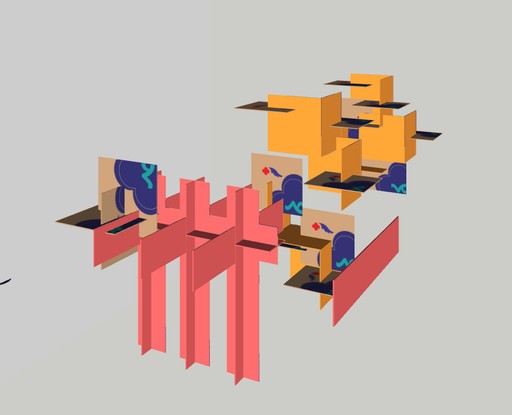
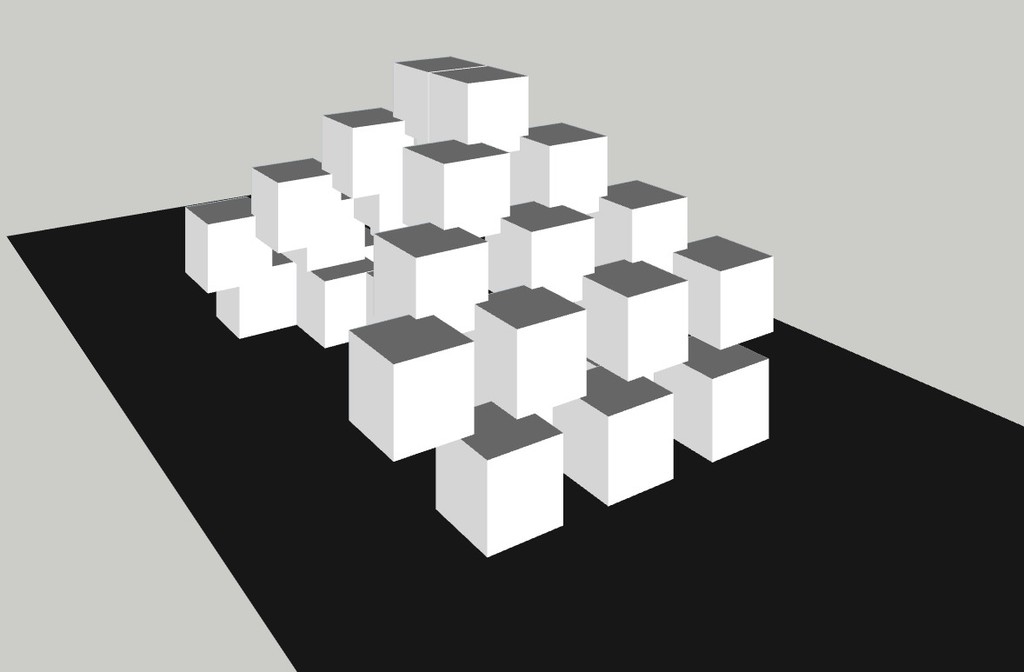
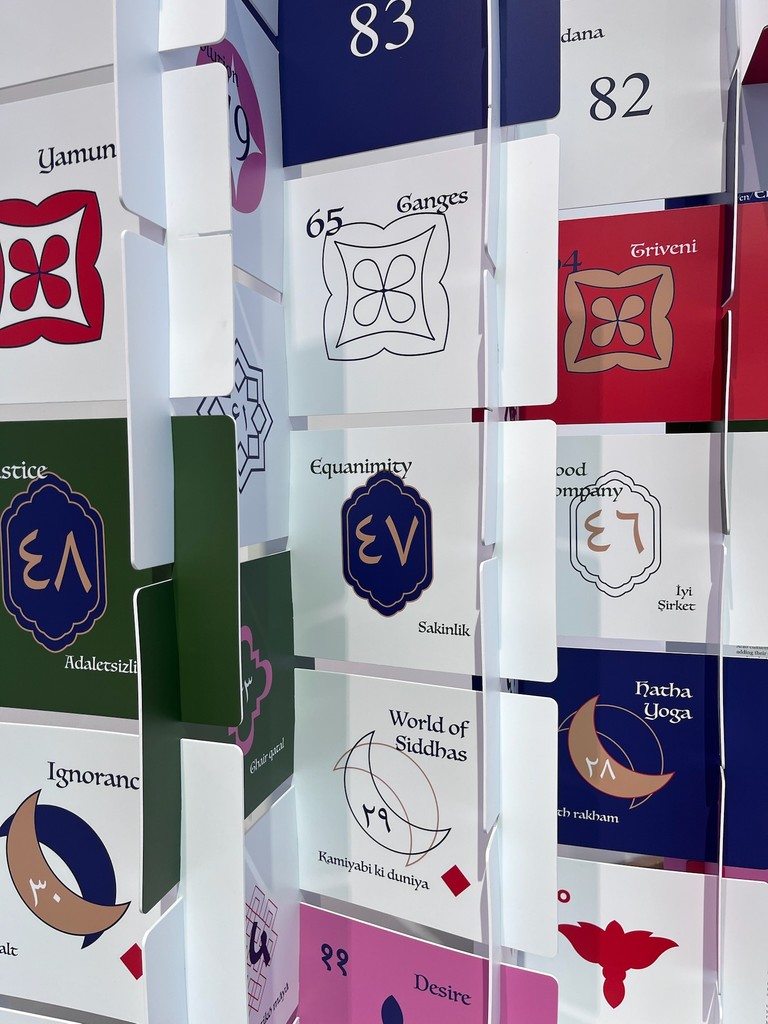
We proposed a life-sized, modular installation translating the virtues and vices of the original game into spatial form. What began as a suspended fabric concept evolved into a stacked-card structure using interlocking joints which was lightweight, tactile, and sustainable, inviting visitors to move through the journey of life and moral values.
The Ideation:
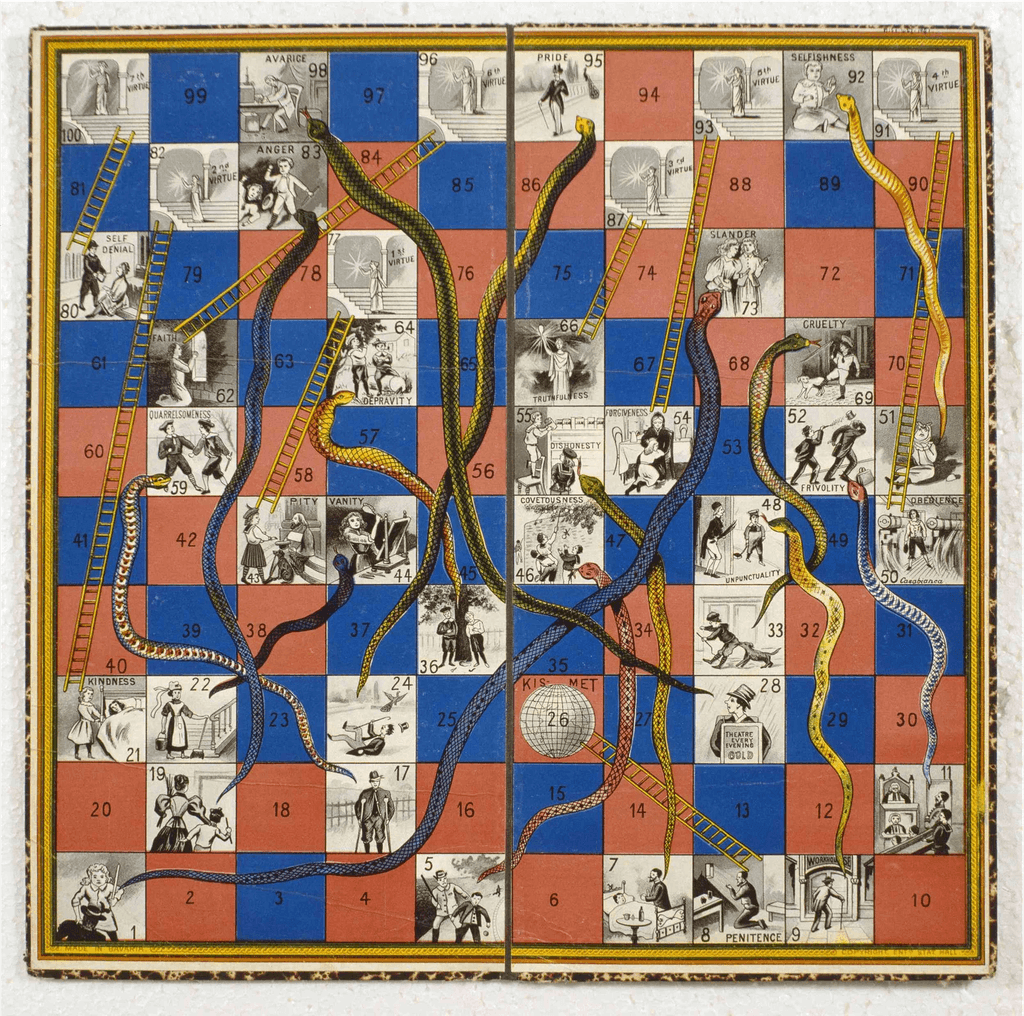

Inspired by the board’s evolution across a century, we drew the visual language from regional motifs and colour palettes, specifically from the original board of designed in that country/region. The tiles were printed locally on eco boards for sustainability and durability.
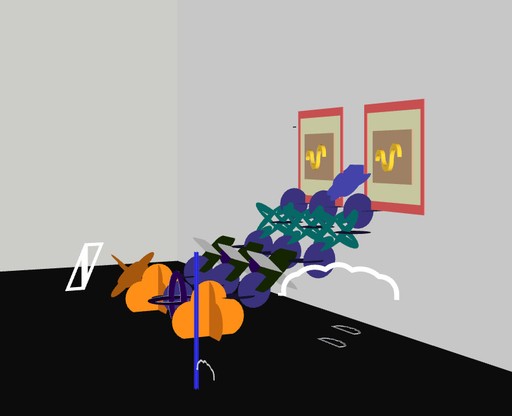
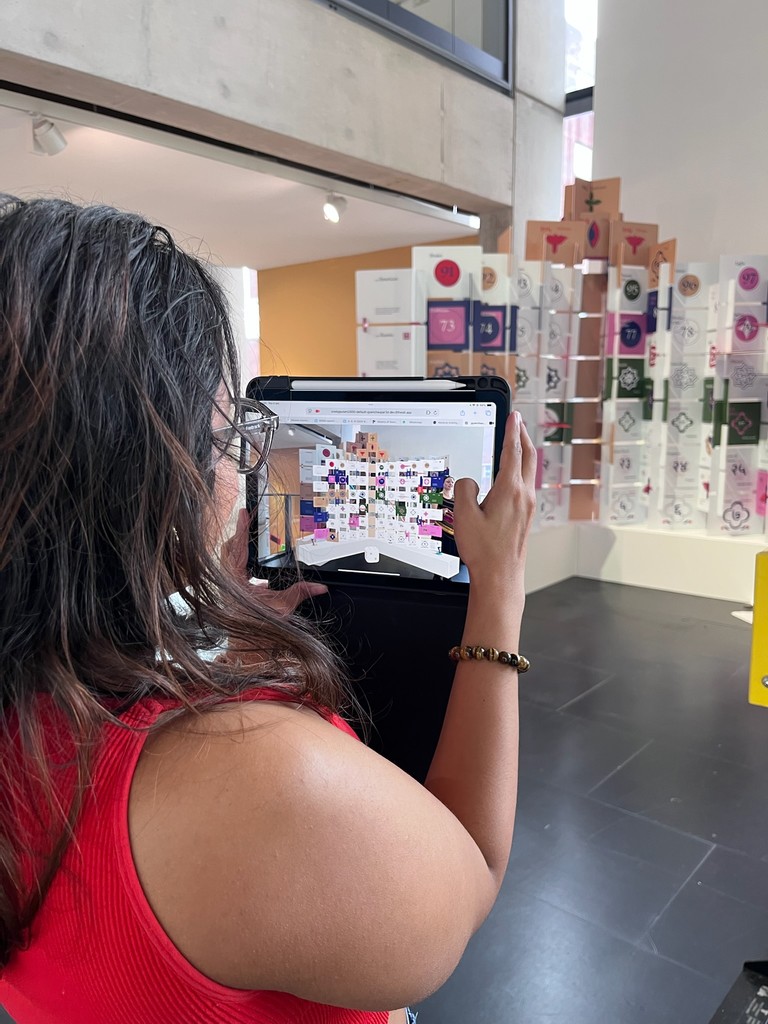
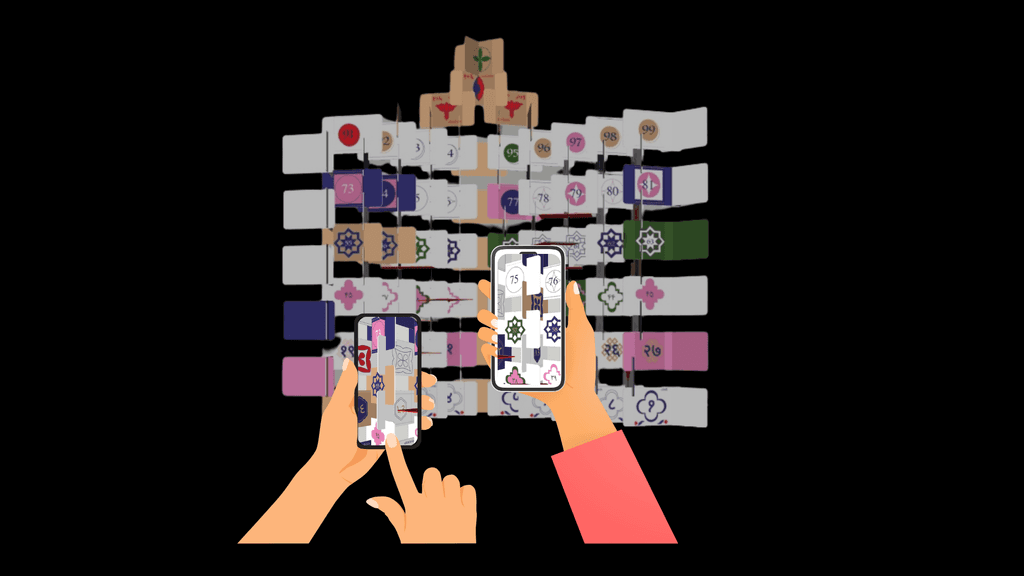
To extend the narrative digitally, an XR layer was added—allowing visitors to scan a QR code and see animated snakes hovering over the installation.
The Story:
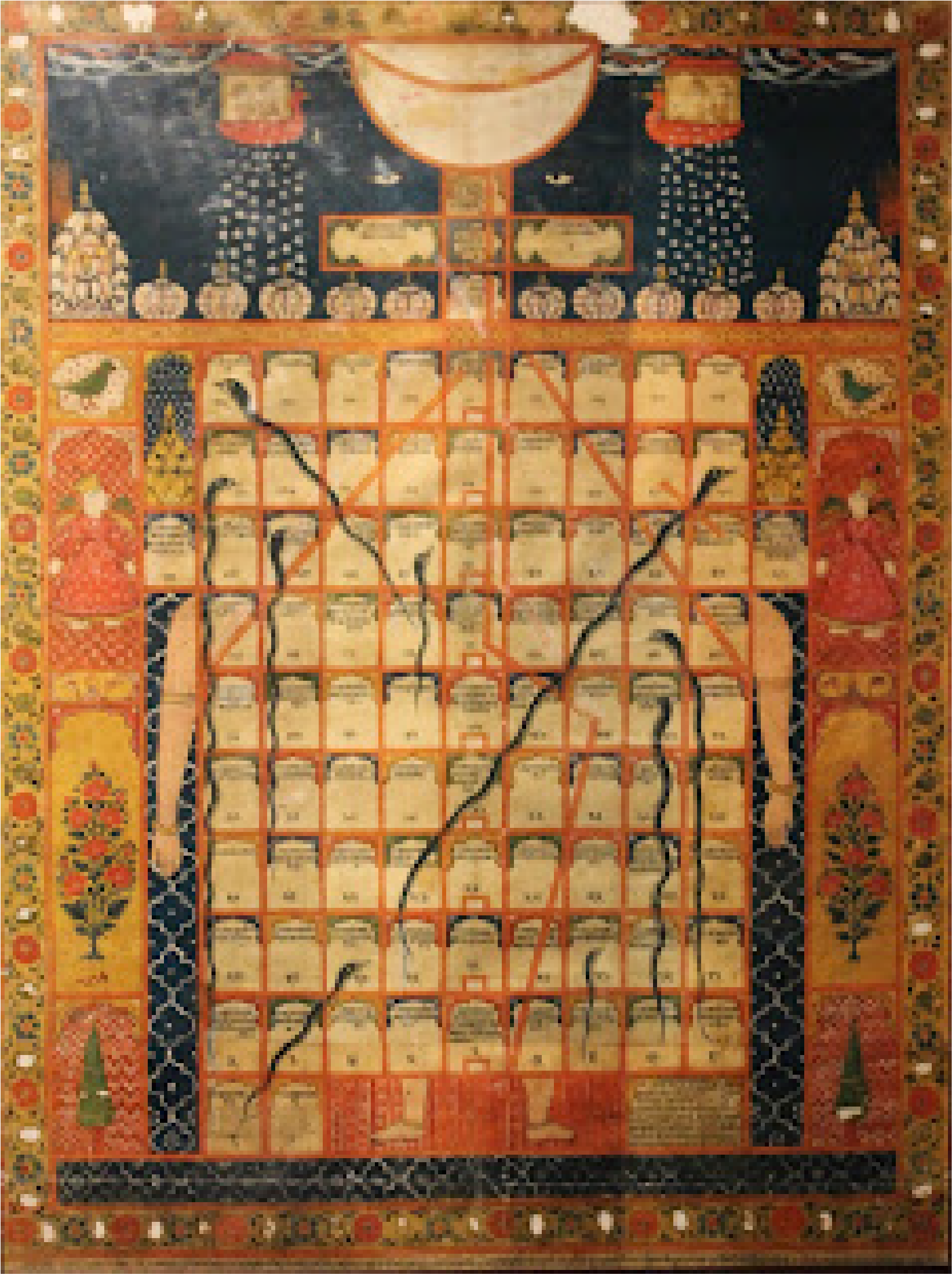
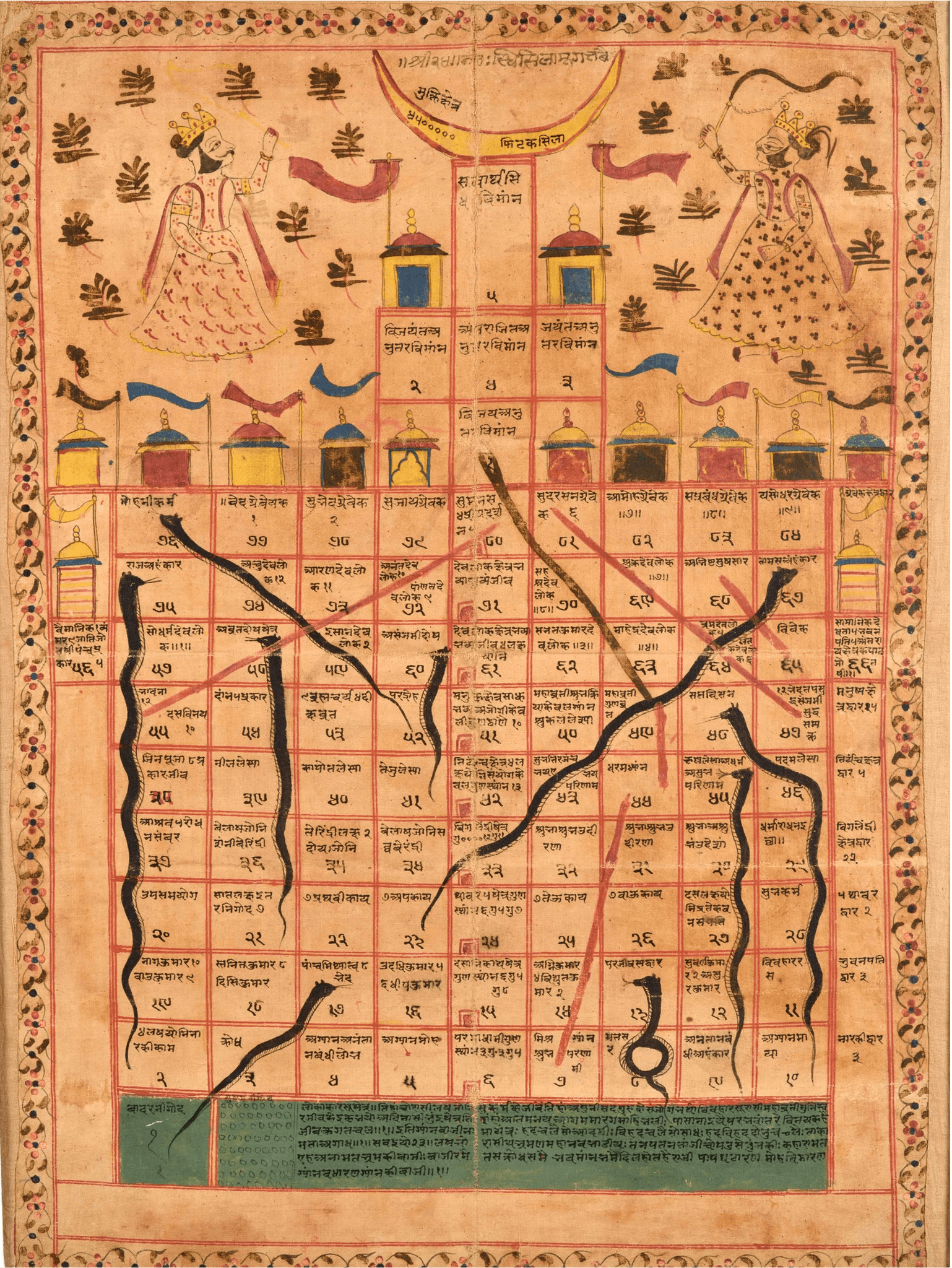
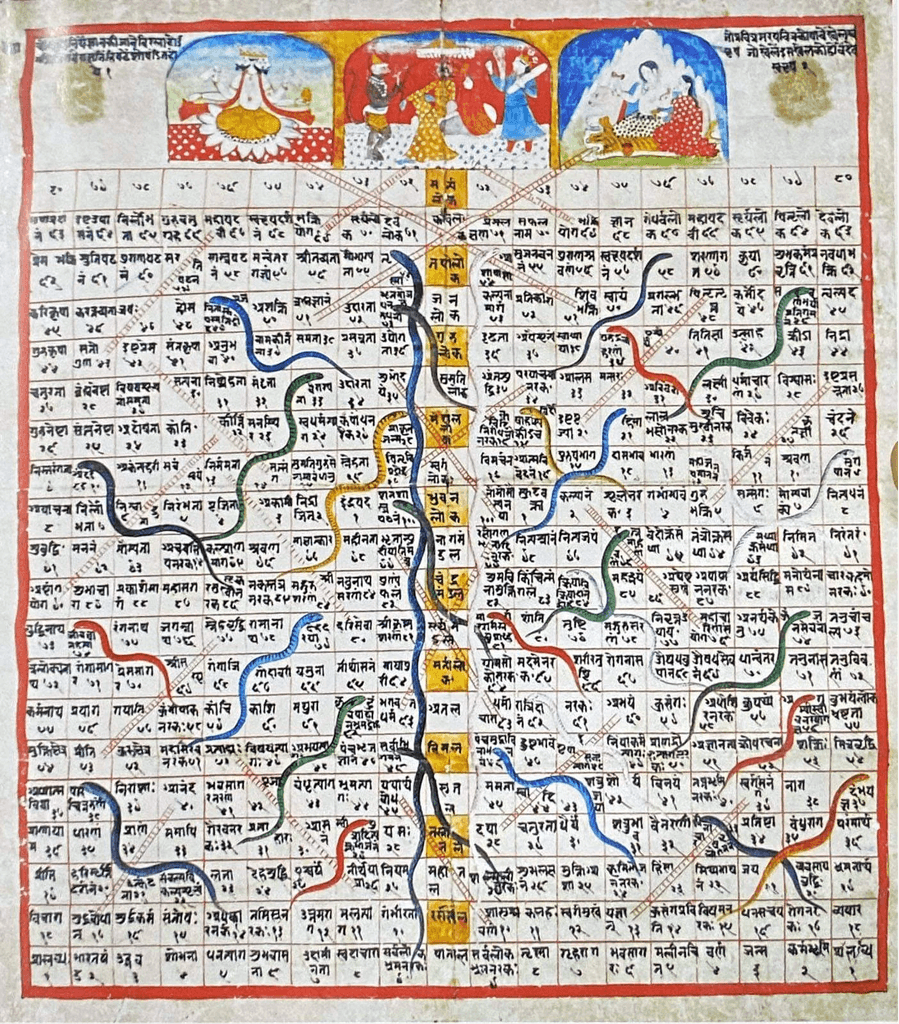
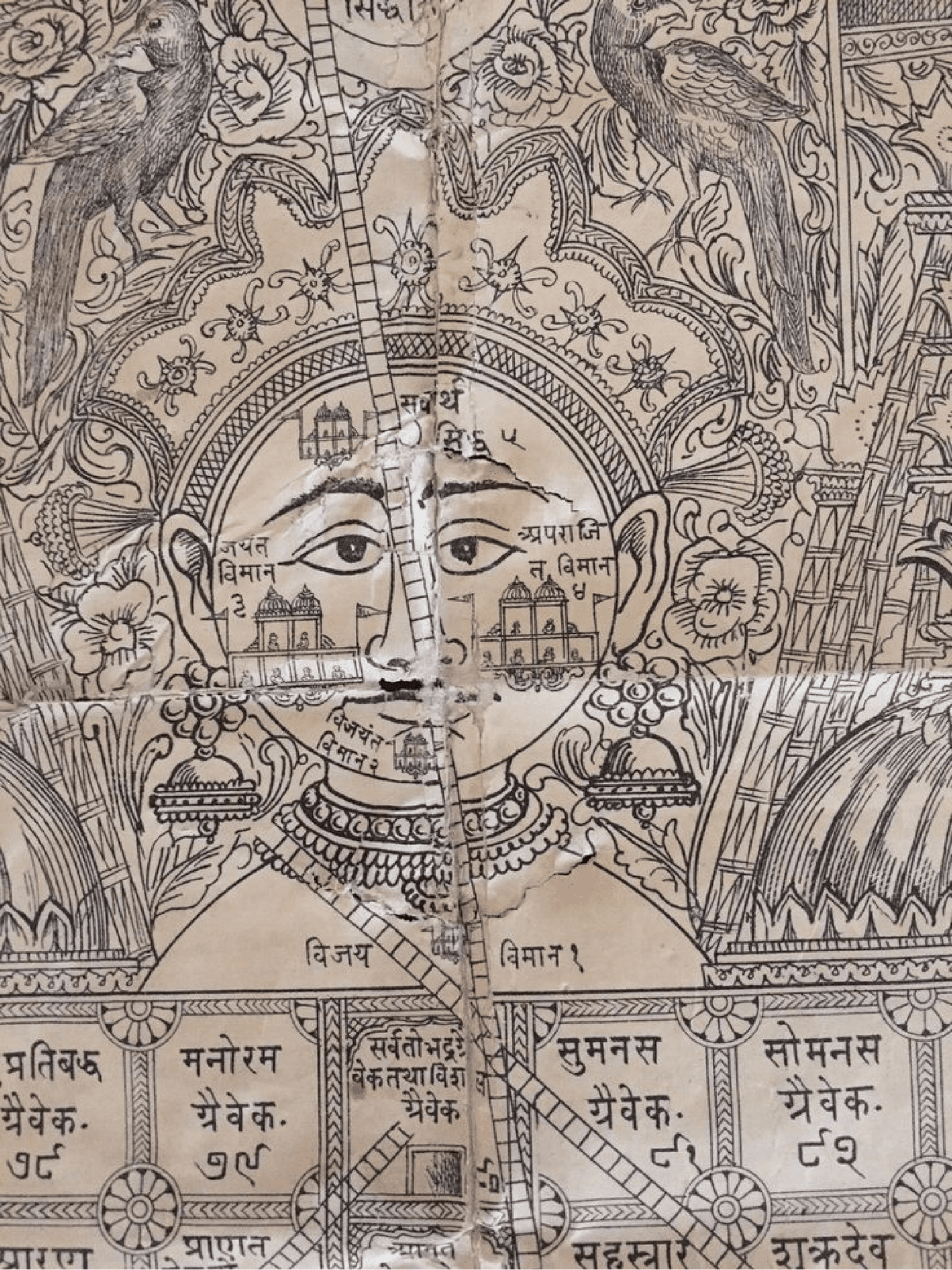
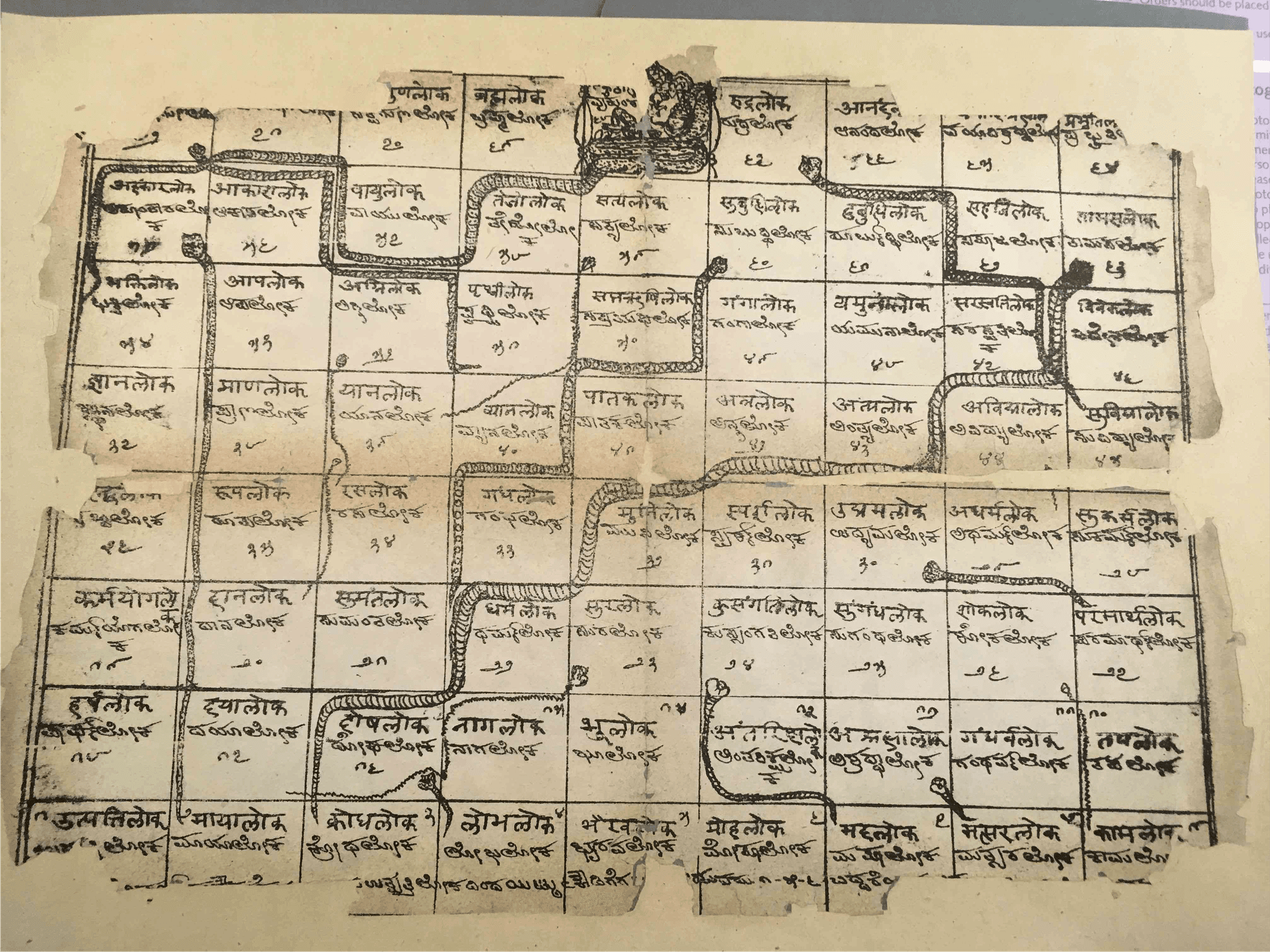
Born in ancient India, Gyan Chaupar was more than a game, it was a spiritual map of the soul’s journey toward liberation. Rooted in Hindu and Jain philosophy, its ladders symbolized virtues leading to moksha, while snakes represented vices that pulled one back into the cycle of rebirth. As it travelled across cultures and centuries, Gyan Chaupar evolved into the modern Snakes & Ladders. Its deeper lessons of morality and self-realization gradually lost to time, replaced by the simplicity of chance and play.
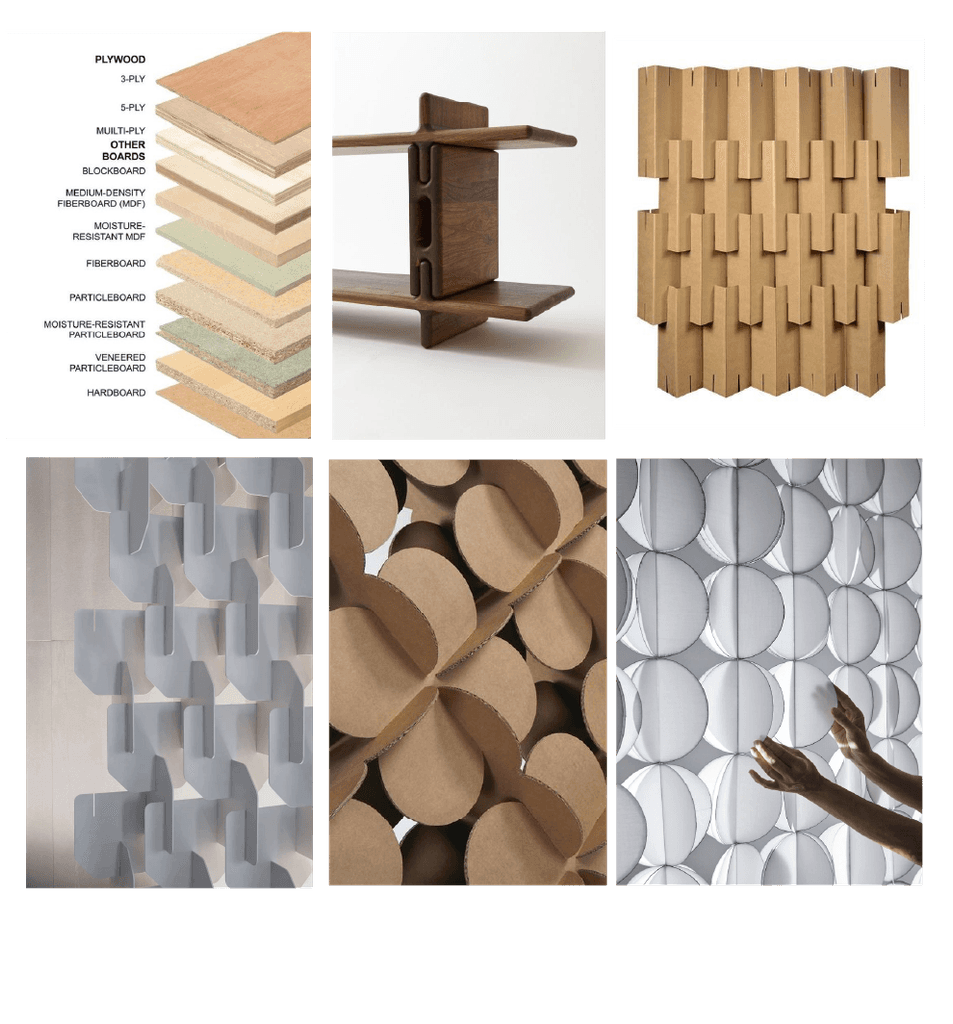
Material Language:
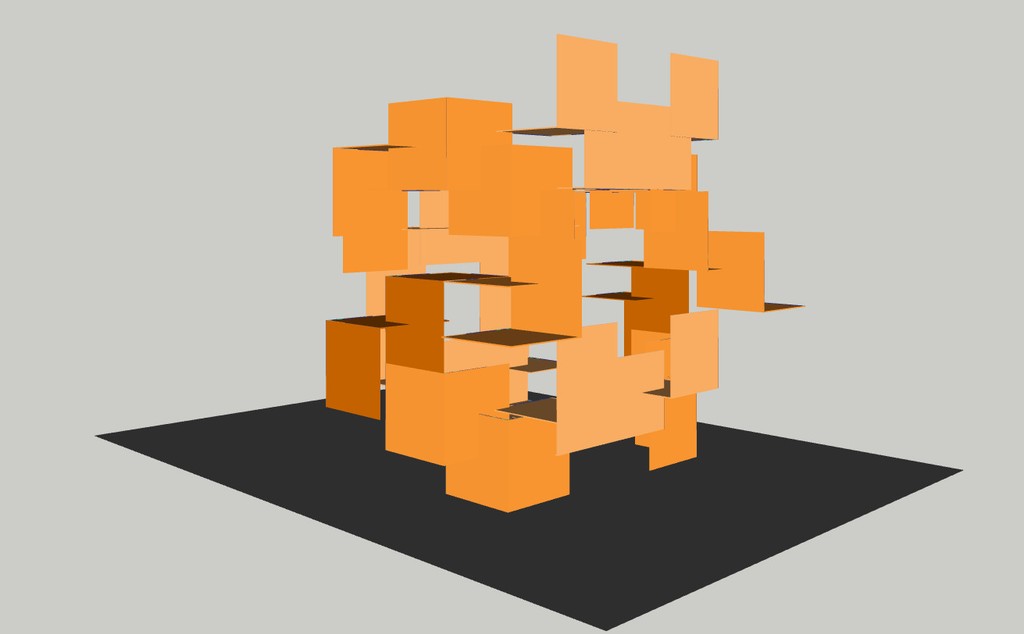
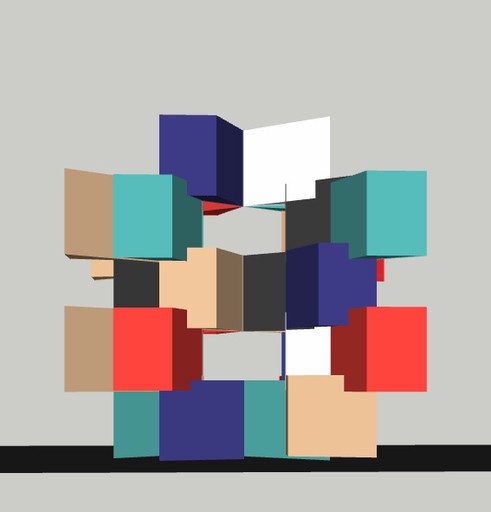
To stay true to sustainable materials and local production, the installation was crafted from eco boards printed by local vendors. The boards were lightweight, fire-resistant, and recyclable. Each tile carried motifs and colours inspired by different regions, reflecting the game’s visual evolution across a hundred years, while the structure stood assembled without adhesives slotted into each other through 3mm slits. Keeping it simple, tactile and reusable.
Original Gyan Chaupar Boards

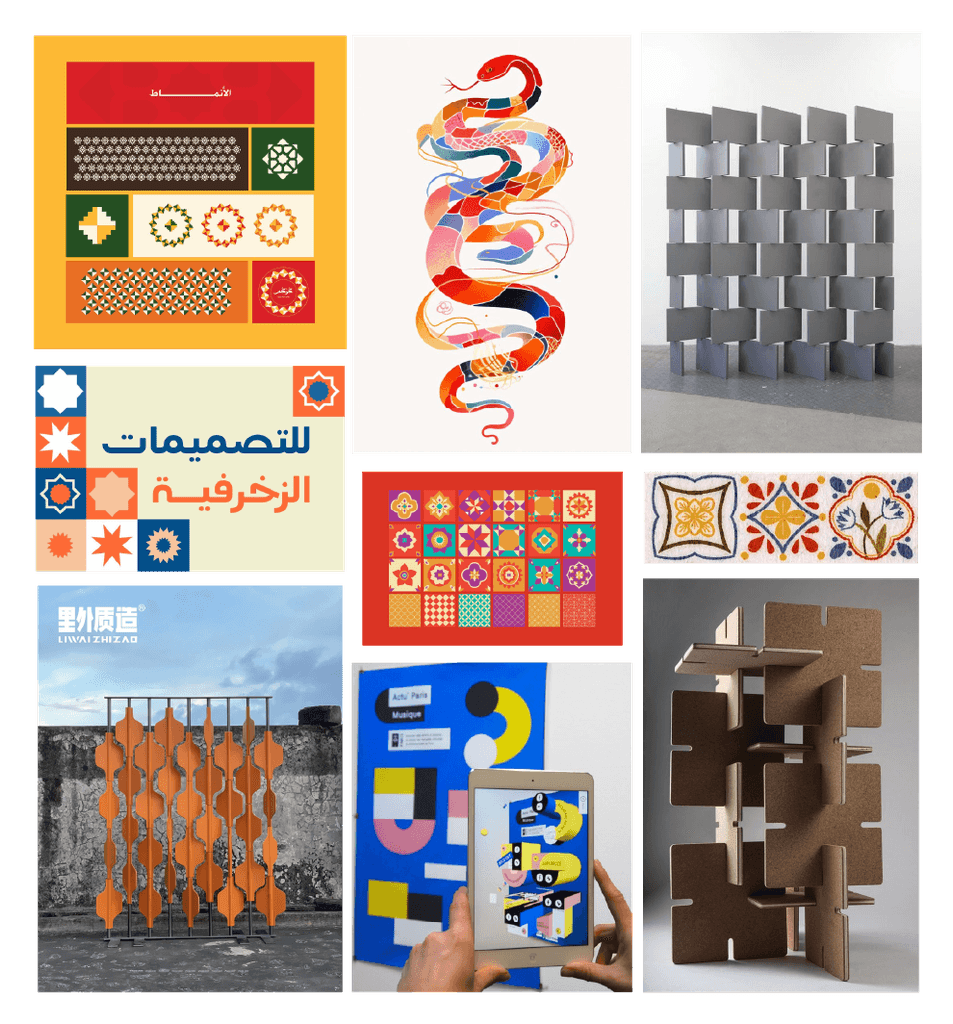
Moodboard
Material board
3D Testing (Structure)
Design Evolution:
The form developed through continuous exploration of material feasibility and cultural storytelling. Shifting from digital prints to physical modules allowed the work to grow in scale and interactivity. The interlocking system not only removed the need for glue but also made assembly intuitive and transportable—mirroring the adaptability of the game itself.
Visual Direction:
The visual language draws from the original variations of the Gyan Chaupar board, preserving its spiritual essence while reinterpreting it for a modern audience. Each design decision pays homage to the game’s evolution across regions and time periods, where its core purpose remained constant, which is to impart moral values and guide players through life’s journey.
Typography:
Typography plays a key role in connecting history with modernity. Regional scripts and era-appropriate typefaces are used to reflect the aesthetic identity of each version of the board. The type design translates the symbolic language of the original Gyan Chaupar into a cohesive, contemporary visual system that feels both authentic and timeless.
Motifs:
The motifs are inspired by architectural and cultural elements from each historical era, reimagined to highlight the game’s symbolic narrative. These patterns and symbols serve as visual metaphors, bridging traditional philosophy with contemporary design sensibilities. The modern yet vibrant colour palette ensures the installation feels fresh and engaging while retaining the game’s contemplative undertones.
AR Development:
To extend the narrative into the digital realm, we collaborated with a 3D developer, Vivek Gautam, to bring the snakes to life through augmented reality. To produce a quiet fusion of heritage and technology.
Visitors could scan a QR code and see digital snakes hovering above the structure, blending Graphic design, motion with spatial composition.
[Creating a mystery element with the snake in AR - to complete the installation you have to scan the QR code and visitors can view this installation anywhere through this QR making it a interesting take away]
By Vivek Gautam
Final Installation:
[with horizontal ladders as part of the structure + virtual snakes and dice]

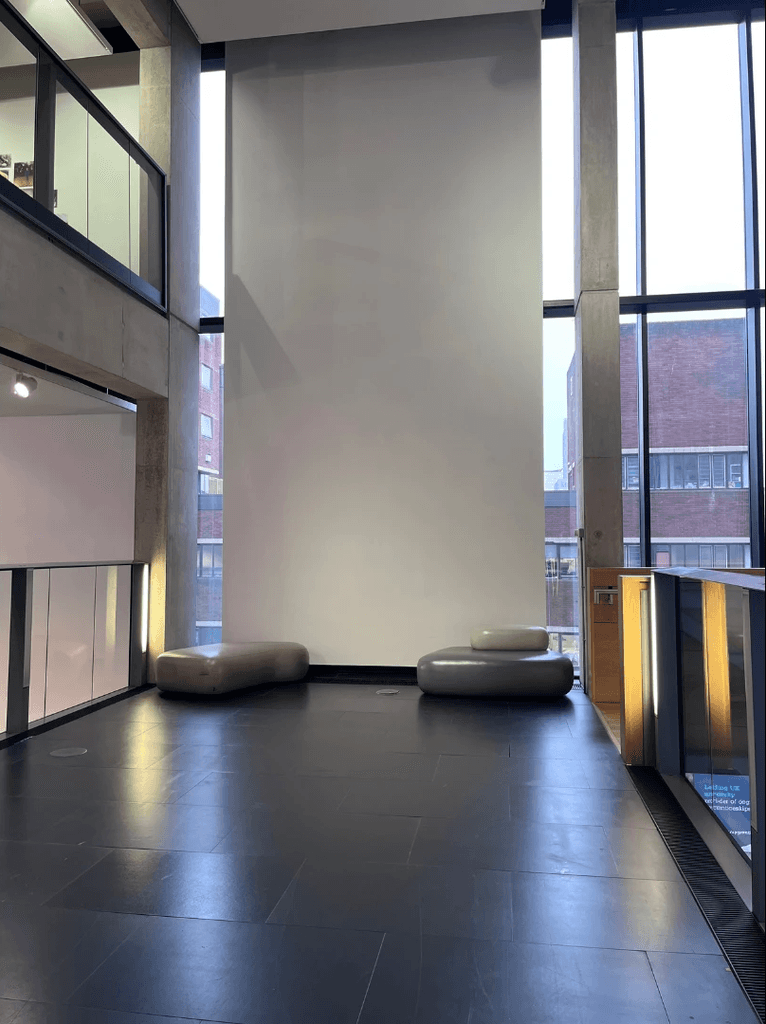
Before
Space
Impact:
The Gyan Chaupar project reclaims the forgotten origins of Snakes and Ladders, telling a story that transcends borders, beliefs, and generations. By tracing its evolution from a spiritual Indian teaching tool to a global childhood game, it reminds us how deeply connected our cultures are, and how a single idea can travel, transform, and unite people through shared play and meaning.
Scope:
Beyond its visual and historical narrative, the project holds potential to live on as an immersive installation in museums, art galleries, and cultural spaces where storytelling and heritage take center stage. It invites audiences to reflect on moral values, cultural exchange, and the universality of human experience, positioning the game as a timeless symbol of unity, transformation, and collective understanding in an increasingly divided world.


Credits
Visual Direction & Graphic Design: Sneha Nayak
Spatial Design & Structure: Niveditta Umasankar
AR Development: Vivek Gautam
Exhibition Curators: Victoria Dahl & Kate Egan
Art Commission: Manchester School of Art
2025 © Sneha Nayak. All rights reserved.